The Mushroom Handbook

Thomas Laursen's mushroom knowledge collected in one place

Mushroom Spots

Mushroom Spots

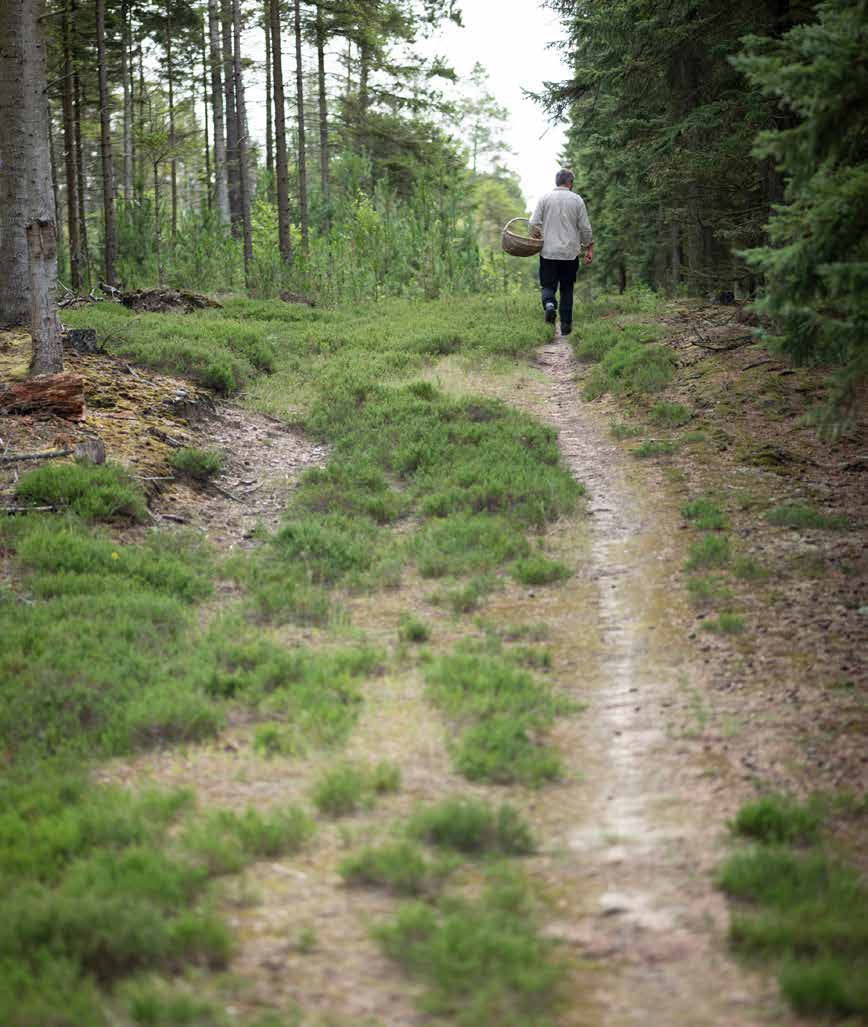
It takes a long time to find a mushroom spot. Sometimes you may be lucky enough to discover one while gazing out the car window; other times you may have walked for half a day or more through a forest without finding anything. I pick many wild plants, berries, fruits, seaweed, roots, and seeds, but mushrooms are nothing like that. Plants can be trusted. They return to the same places year after year, at predictable times. There is usually a recognisable season you can rely on. Not so with mushrooms; they are capricious and far harder to predict. They appear when the time is right for them, with great annual variations. You must always be ready, and it is no good having booked a trip to Barcelona in September. Then you risk losing the mushrooms at your best spot that year.

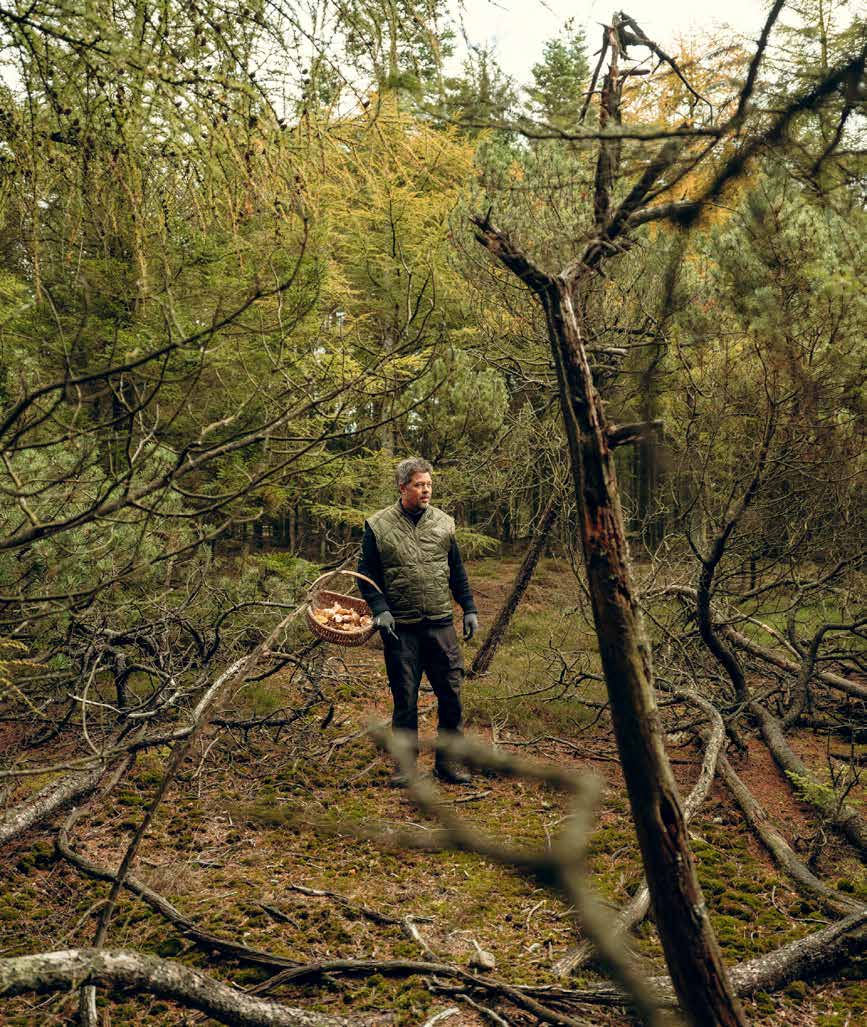
A mushroom spot is something special. It is your spot, and you found it because you were there at the right moment. You could tell whether it was a good idea to step into that thicket, because it looked like a promising place. There was a small rise that hid the mushrooms; that is why no one else had seen them. You peered over the rise and spotted the little cluster of mushrooms, and your heart beat that much harder. You nearly gave in to the urge to run over and seize them. As though they might run away. But you composed yourself, steadied your pulse, and savoured the moment before kneeling down and cutting the mushrooms neatly, one by one. Now they lie in the basket, and you breathe quietly, already dreaming of reliving this moment.

Perhaps you share the spot with someone else. You do not know who it is, but some years you arrive after them. Then you come to your spot and see cut stems and regret that you did not go the day before, as you had considered.

The New and the Old School

Today there are two opposing tendencies among mushroom foragers. One is the old school, where you are very secretive about your spots. You would never dream of giving them away. That is the school I grew up with, and the one I still belong to today. I have many mushroom spots that I found myself and therefore know the value of. That value can be measured in time, among other things, because much of your time as a mushroom forager is spent searching. If you have many good spots, you can always go out and pick mushrooms. But if you have never walked all those kilometres, you probably do not fully appreciate the value of the spots.

The other, "new" school is all about sharing, where sharing itself is what matters most. The creed here is that nature belongs to all of us, and you are petty and selfish if you refuse to give away your spots. Perhaps the foragers who belong to the new school have not walked quite as many kilometres yet, and they do not understand the old school. But the old school understands the new school well enough, for they once stood in the same place.
Good Mushroom Habitats

Good Mushroom Habitats

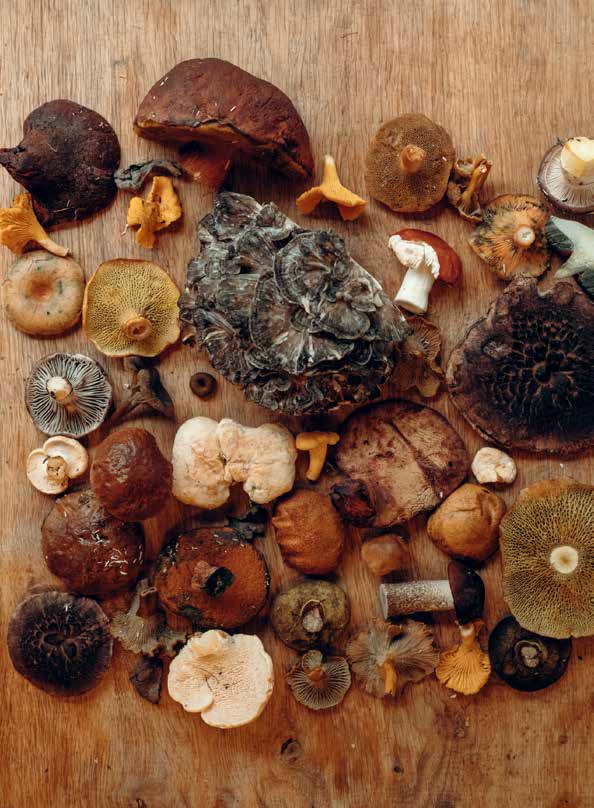
Mushrooms are found mostly in forests, where there is both dead matter to feed on and living trees for the mushrooms to form partnerships with. Generally speaking, the older a forest is, the better a mushroom forest it is. If there is great species diversity among the trees and plenty of dead trunks as well, there are typically also many mushrooms. The mushrooms that partner with trees -- the mycorrhizal fungi -- prefer species such as beech and oak, which have been native to Denmark for a long time.

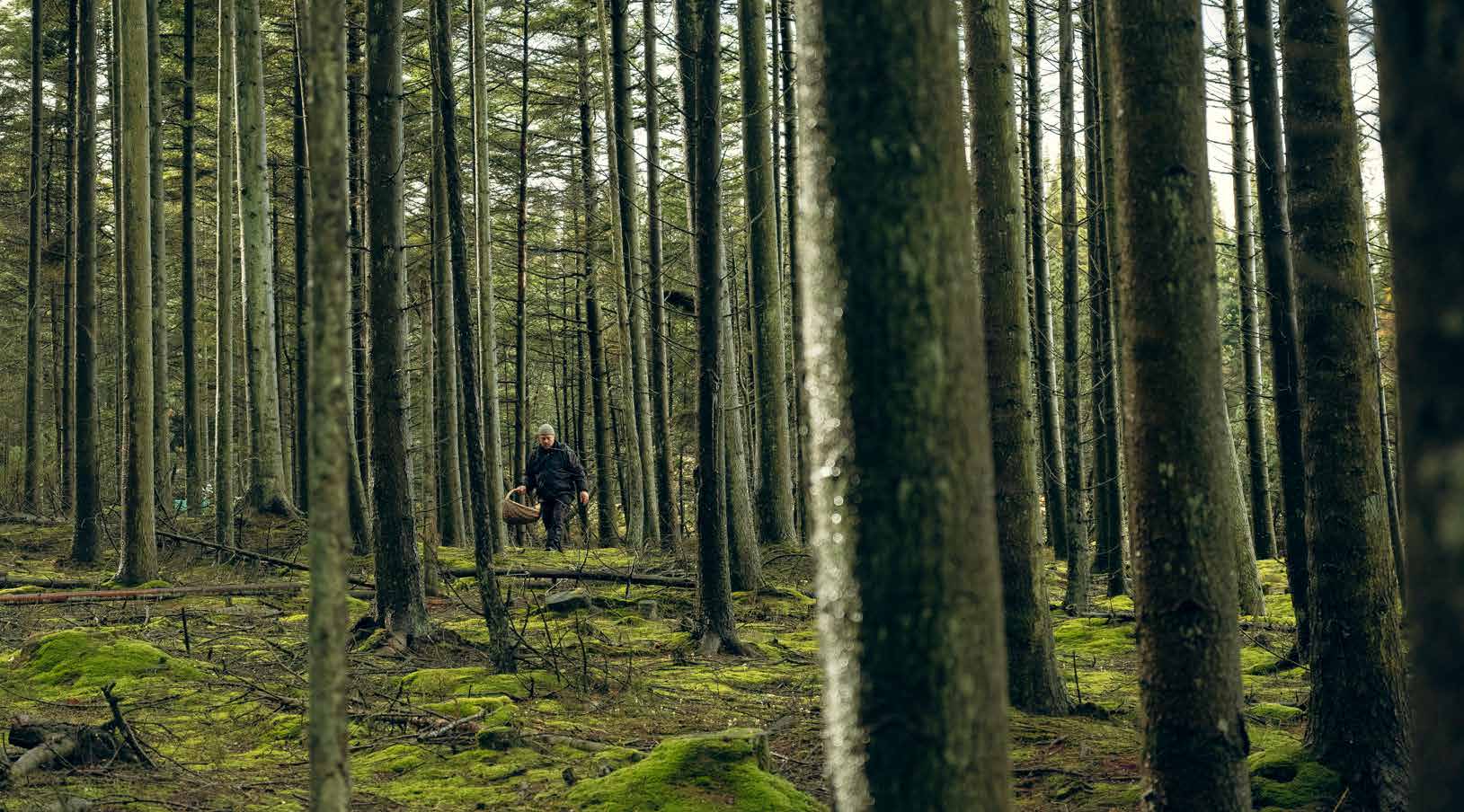
Mixed forests are exciting to forage in, but not necessarily the most productive when it comes to edible mushrooms. A monotonous spruce forest, on the other hand, can yield many kilos of certain species at the right time, though you will probably find only a few varieties. As a rule, the older a forest is and the more fully grown native trees it has, the better.

Parks and Cemeteries

The netted-stalk indigo bolete thrives in parks and cemeteries, as do some brittlegills and various field mushrooms and blushing amanitas. If there are older trees, it is worth looking for giant polypores, hen of the woods, and chicken of the woods here, and you may also be lucky enough to find the fairy ring champignon, often growing in fairy rings.

The Deciduous Forest

Older beech forests along the coast, preferably with clay and humus soil, are a classic and highly varied mushroom biotope. There are often several different tree species in this type of forest, and they may even grow on slopes down towards the coast. Here you may be lucky enough to find chanterelles, many boletes, black trumpet mushrooms, and hedgehog mushrooms. In dry summers it is a good place to look for brittlegills, and late in the season there will be particular opportunities to spot black trumpets, fairy ring mushrooms, winter chanterelles, and honey fungus.

Grazed oak forest is a distinctive habitat, not found in many places. A relic from an older time when livestock roamed the woods. The many ancient oaks here can offer beefsteak fungus, hen of the woods, and chicken of the woods.

The Coniferous Forest

Spruce plantations are a classic, productive location for mushroom foragers, and in the coniferous forest you can find a great variety. There can be a storm of porcini, chanterelles, milk caps, and brittlegills. Typically, mushrooms respond quickly to rainfall in the coniferous forest, since spruce is most often planted in sandy, nutrient-poor soil where water drains fast. Late in the year, spruce plantations also deliver hedgehog mushrooms and winter chanterelles.

Pine forest with a bit of age can be interesting to walk through, as chanterelles, hedgehog mushrooms, and various scaly and slippery boletes are often found here.

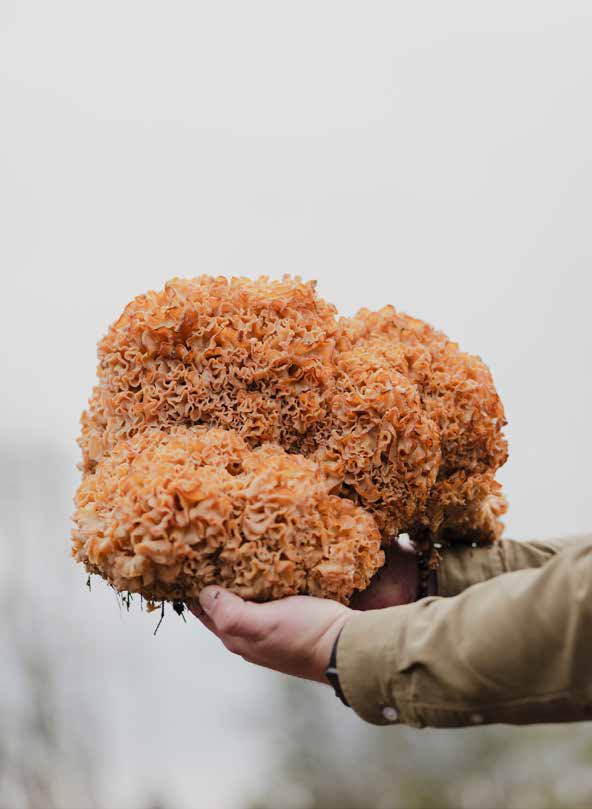
In dense, untended spruce plantations with dark ground, there can be excellent opportunities to find porcini at the right time. Older, slightly open coniferous forests with large trees are the right place for cauliflower mushroom, but not much else.

Sensitivity and Toxicity

Sensitivity and Toxicity

Last time I counted, I had eaten 106 mushroom species in Denmark, and I probably eat around 50 different species each year. But not all mushrooms are edible, and therefore a certain degree of caution is necessary when you pick mushrooms. Some are fatally poisonous, and others are delicious and edible, even raw; those are typically the ones we prepare and that are known to most people.

Between these extremes lies a huge group, some of which can be eaten, and others that may be mildly toxic or allergenic. A kind of grey zone between the edible and the fatally poisonous mushrooms, where many factors can influence how you react to a mushroom.

I have a notion that a large proportion of so-called poisonings are actually caused by factors other than the mushroom itself, such as poor preparation, the amount of mould on the mushroom, or quite simply that the mushroom had gone past its prime.

Experience and Caution

I personally pick many different mushrooms, and some of the species described as potentially toxic I eat without reservation. This applies, for example, to honey fungus and some of the scaly boletes that are otherwise considered questionable in many books. I have become less fearful over time, but that would not have happened without many years of experience and inspiration from other mushroom cultures.

Traditionally, mushrooms have not played a large role in the Danish diet, and so our mushroom culture has been rooted more in the academic world than in the gastronomic. It is a very different picture among our neighbours, where mushrooms were historically tied to the search for food and basic survival.

Types of Toxins

Gastrointestinal toxins cause anything from a bit of rumbling to diarrhoea and vomiting. The reaction typically comes quickly and is directly related to the amount you have eaten.

Neurotoxins in mushrooms also act relatively quickly, and in addition to a range of serious physical poisoning symptoms, they can cause hallucinations.

Cytotoxins are found in species such as the death cap and destroying angel. They are insidious and only reveal their effects when it is too late. Cytotoxins destroy the liver and kidneys, and hospital treatment is vital.

Antabuse-like substances are found in some mushrooms, and for certain species the effect only occurs after repeated consumption.

Good Advice

Only eat mushrooms you can identify with certainty, and never eat anything you cannot identify.

Only eat fine mushrooms. Avoid mushrooms with many worms and a lot of mould.

Eat cooked mushrooms -- well cooked.

If you eat a new species, eat only a small portion the first time. One species at a time.

Do not trust quick apps -- they get it wrong too.

Only listen to advice from knowledgeable people, and remember that you yourself are responsible.

Get yourself a good mushroom book for beginners.

Find a knowledgeable mushroom friend, and go on forays together.

Good Picking Etiquette

Good Picking Etiquette

There are rules for how to move about in the forest. On public land, you may roam relatively freely, even after sundown. In private forests, you may walk on roads and paths and pick what you can reach from there for personal use, and only from sunrise to sunset.

It is always good form to move through the forest with consideration. There are no rules for good form, but for example, I think it is good practice to stay away from areas where others are picking. My general rule is a personal space of at least 50 metres when foraging.

It is good form to leave mushrooms standing if you do not need them. This applies to the edible ones, but also to the poisonous or unremarkable. Leave them be -- they serve a purpose in a larger context for others besides yourself.

That said, what we pick are the fruiting bodies, not the mushrooms themselves, so nothing is destroyed. It may even be the case that we help with dispersal by picking the fruiting bodies.

Mushroom Gear

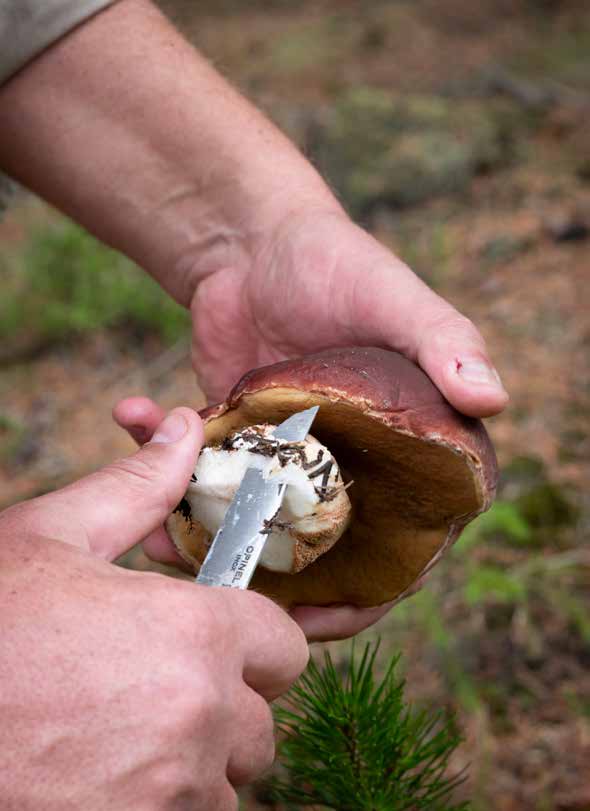
It does not take much gear to become a mushroom forager. In fact, a knife and a basket are enough. A folding Opinel knife is my preferred tool, preferably a larger model. Some mushrooms I simply pick with my fingers, others I cut.

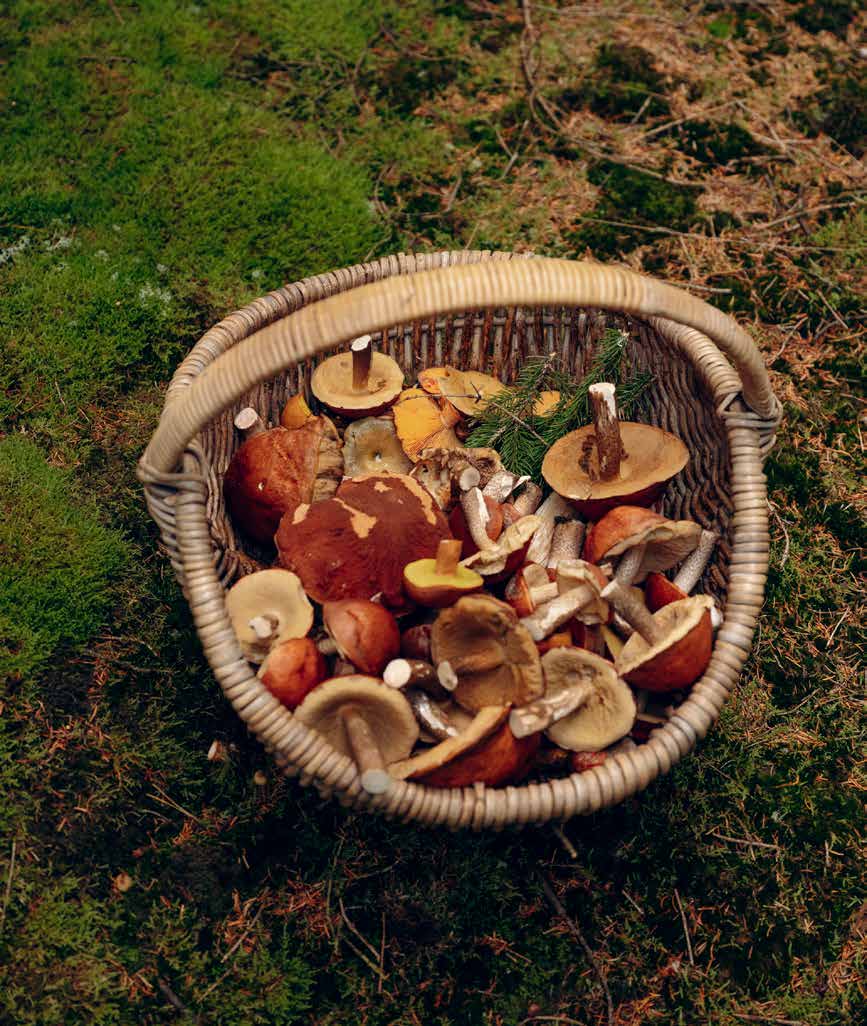
It is important to use a good basket, because it allows for some air circulation around the mushrooms, which prevents mould between picking and eating. The basket also allows spores to be dispersed after picking.

Mushroom Flavours and Textures

Mushroom Flavours and Textures

Some mushrooms are mild, others have a powerful flavour. Some are fruity, others carry the dark forest floor as their base note. Some are rich in umami, others have a pronounced character of their own -- apricot, anise, nut, onion, or something else entirely. Some are chewy, others are crisp, almost crunchy. All these qualities can be used in different ways, and it takes more than a mushroom stew to get the full reward.

Some mushrooms can be used in desserts, and some can be served cold, even raw. These differences can partly be traced to the mushrooms' family classification, but even within individual families there are gastronomic variations.

Frying Tips

Maillard! The name of a scientist who has lent his name to the process that occurs during frying -- when the sear forms and delivers great flavour. The challenge with mushrooms is their often high water content.

The water can be drawn out of the mushrooms with salt, but that is not enough. It is therefore a good idea to start by dry-frying the mushrooms. Only once the water has come out and evaporated should you add oil or butter for frying.

A juicy but not wet mushroom with a distinct, light-brown sear is the ultimate goal.

Chanterelles

Common and pale chanterelles are both fruity in aroma, slightly fibrous in texture, and can be cut crosswise to avoid the fibrous sensation. The small ones are lovely for pickling, and it is a well-known technique to "tear" larger specimens lengthwise.

The winter chanterelle is the endless giver at the end of the season. Its flavour has lodged itself in my brain and is for me truly synonymous with the arrival of winter and dark evenings. It has a pleasant, deep forest flavour.

Hedgehog mushroom is crisp and crunchy, with a slightly crumbly texture, and it has a mild, pleasant flavour.

Boletes

Mature, large boletes can be soft, but not the indigo bolete, which retains its crispness. The same crispness is also found in young porcini when raw.

Brown birch bolete is soft after cooking, with a pleasant, mild flavour.

Scaly boletes have firm caps and slightly fibrous stems.

Slippery boletes are usually soft in the flesh. They are best in soft dishes, where their lack of firmness and "long" texture come into their own.

Brittlegills

Brittlegills -- and milk caps, which belong to the brittlegill family -- are more brittle than most other mushrooms. They have no long fibres, and when you break them, it is almost like dry cheese or yeast, which makes them particularly well suited for pickling.

Wood-dwelling Mushrooms

Chicken of the woods must be taken at the right moment; very young with rounded caps. The texture can vary from scallop-like to something resembling chicken breast or chicken thigh.

Hen of the woods has the most insistent meaty flavour with a hint of sesame, and it is perhaps the most filling mushroom we have. It is a complete meal in itself.

Giant polypore has a deep, woodsy flavour akin to the winter chanterelle.

Cauliflower mushroom has a curious aroma, almost like a blend of caramel and mustard or cabbage. It is crisp when young, and becomes softer, approaching pasta, as it matures.

Cleaning Mushrooms

Cleaning Mushrooms

When you pick mushrooms, they should as a rule be roughly cleaned before they go in the basket, provided, of course, that you have identified them with certainty first. If you have not identified a mushroom, it can be problematic to trim anything away, as it may be precisely the part needed for reliable identification.

As a rule, I always try to avoid water when cleaning mushrooms, because most mushrooms absorb far too much of it, especially large boletes or other softer species. I do not rinse them, but use only a damp kitchen towel. If there is soil on the mushroom, I simply trim a little off.

Some mushrooms, however, simply cannot be cleaned adequately without water. This is the case, for example, with chanterelles from West Jutland plantations and from dune plantations with mountain pine and lichen. There will always be sand on these lovely mushrooms, so here I give them a brief rinse after cleaning with a brush and herb knife.

Preserving Mushrooms

Preserving Mushrooms

Refrigeration

It is important that mushrooms are refrigerated as quickly as possible after you have picked them. This gives a shelf life of roughly one to ten days, depending on the species and size. Refrigeration is a brief and necessary stop, but not a permanent preservation solution.

Large mushrooms with a soft texture in particular have a short shelf life. So eat the big and ugly ones first, but be careful not to keep the pretty ones too long.

Freezing

Freezing is a good way to store mushrooms, and if you freeze yours, they can keep for about a year. I always blanch my mushrooms before freezing, but it is not necessary for all species.

The advantage of blanching before freezing is that the mushrooms take up a little less space, allowing you to fit more in the freezer. Another bonus is the blanching liquid; the liquid I blanch in, I typically use for all the mushrooms in a batch.

Drying

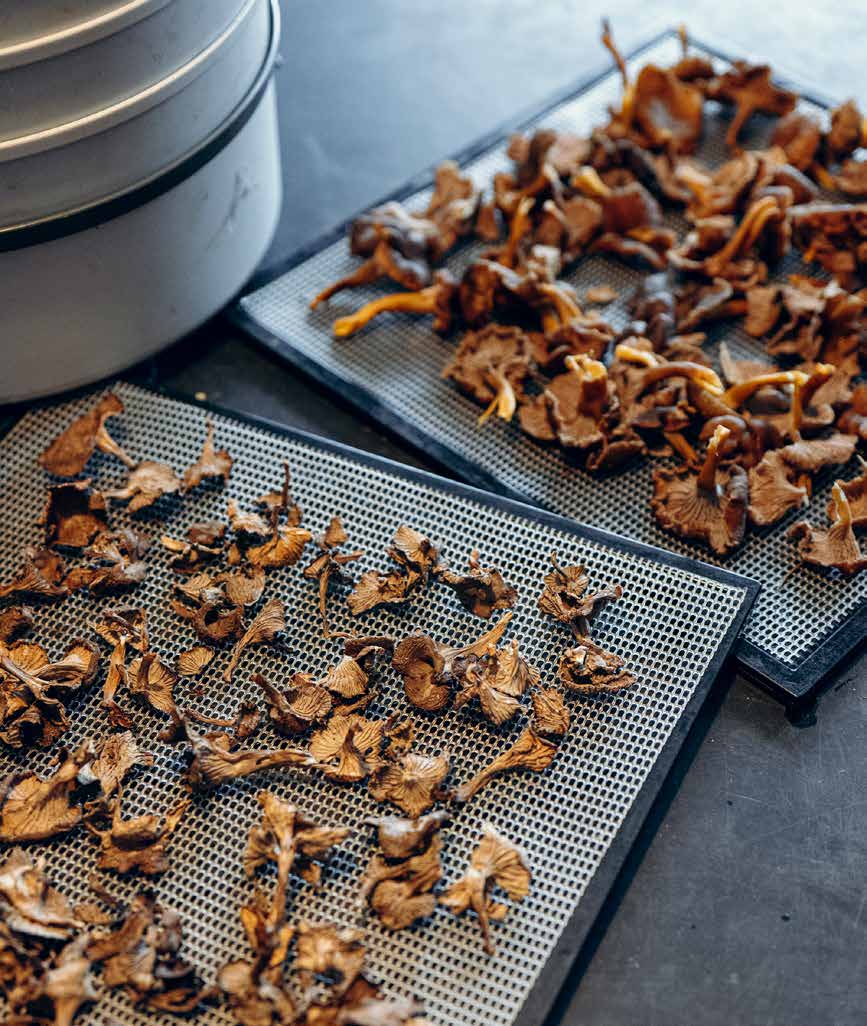
Drying is perhaps the most widespread way of preserving mushrooms. You dry mushrooms by driving the water out of them, thereby making them shelf-stable for the long term. When mushrooms dry, they typically shrink to about 7% of their original weight. Dried mushrooms keep for a long time. In principle, indefinitely.

Mushrooms dry best at 50 degrees with good air circulation. It is important that there is no moisture left in them -- none at all. The easiest way to check is to snap the mushrooms after drying. They should snap easily, with clean breaks.

Dried mushrooms that are subsequently blended take up very little space on the shelf, but the flavour is immense and can add great depth to all kinds of dishes.

Pickling

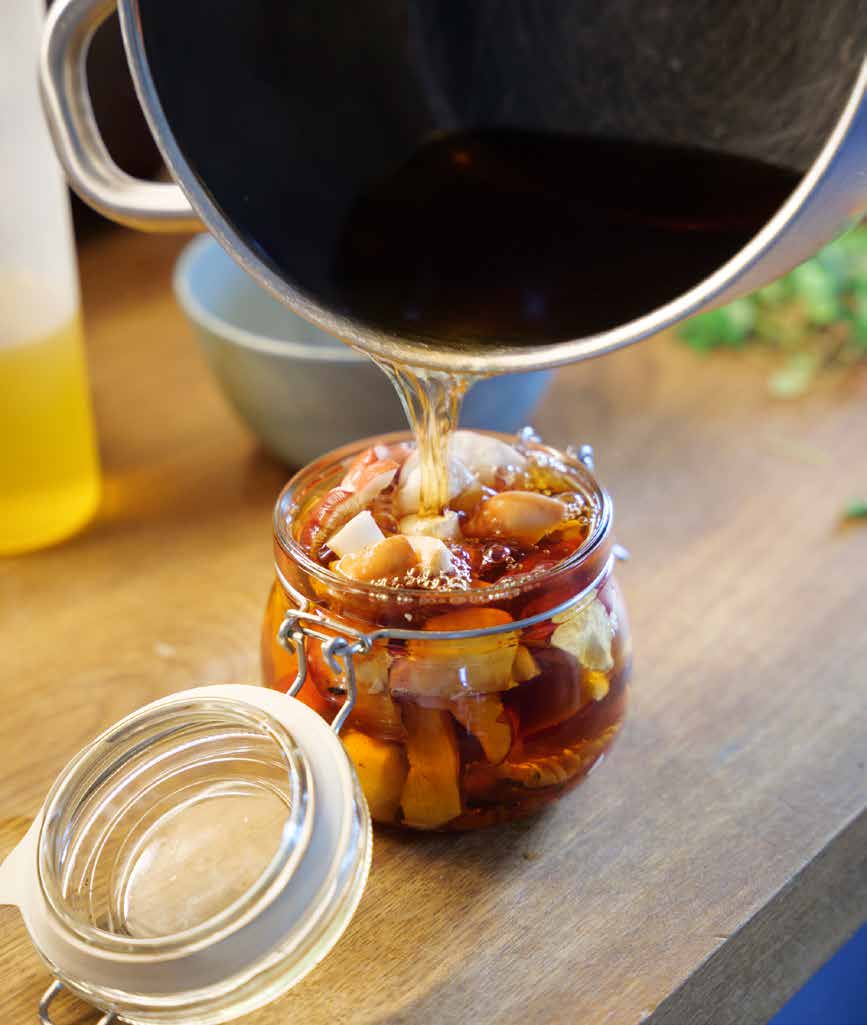
When you place mushrooms in vinegar or another acid-rich liquid, it gives them a long shelf life. At least a year.

I most enjoy pickling milk caps and brittlegills, but chanterelles, hedgehog mushrooms, and winter chanterelles are also among my favourites. Brittlegills and milk caps retain their tenderness after pickling in a delicious way.

Smoking

Mushrooms take well to smoke, and it may even be possible to preserve them by smoking alone. Smoke is a delicious flavour that should be added in limited amounts, and I often smoke mushrooms before drying them.

When you want to smoke mushrooms, you can use a small grill with a lid; first grill the mushrooms at low heat, and then smoke them for five to ten minutes.

Fermentation

Fermentation consists of introducing bacteria that are beneficial to us humans into a food item. I prefer to use large mushrooms, which I clean thoroughly. Then I blanch the mushrooms. After blanching, I place them in vacuum bags with a small amount of water. I then weigh the mushrooms including the liquid and add 2% salt.

Mushroom Butchery

Mushroom Butchery

When I look back at the mushroom world I encountered in the 90s, it was gastronomically quite conservative compared to today. There were many knowledgeable people who had spent much of their lives eagerly acquiring knowledge about mushrooms.

Back then, the prevailing belief was that mushrooms should not be mixed, and that some mushrooms were not worth eating even though they were edible. One day I saw a mushroom dish in a cookbook by Henrik Boserup; he mixed all sorts of fried mushrooms in a single pan, and then had the audacity to add lingonberries. It was a huge eye-opener for me.

And this is where the "butchery metaphor" comes in, because as any butcher knows, meat varies depending on which animal it comes from, the age of the animal, and of course the different cuts. But proper preparation means most of it can be put to good use. If we replace the animal with a mushroom, much the same factors come into play.

The Butcher's Table

When I process mushrooms, I set myself up at a large table with an herb knife, damp kitchen towel, dehydrator trays, buckets, and boxes. I take one mushroom at a time and assess how it can best be used.

It is a peculiar blend of craftsmanship, therapy, laziness, hunger, daily routine, and cosiness. It is a "moment of zen" for me, which I enjoy immensely. I feel rich when I stand there with all my mushrooms and recognise them from the forest earlier that day.

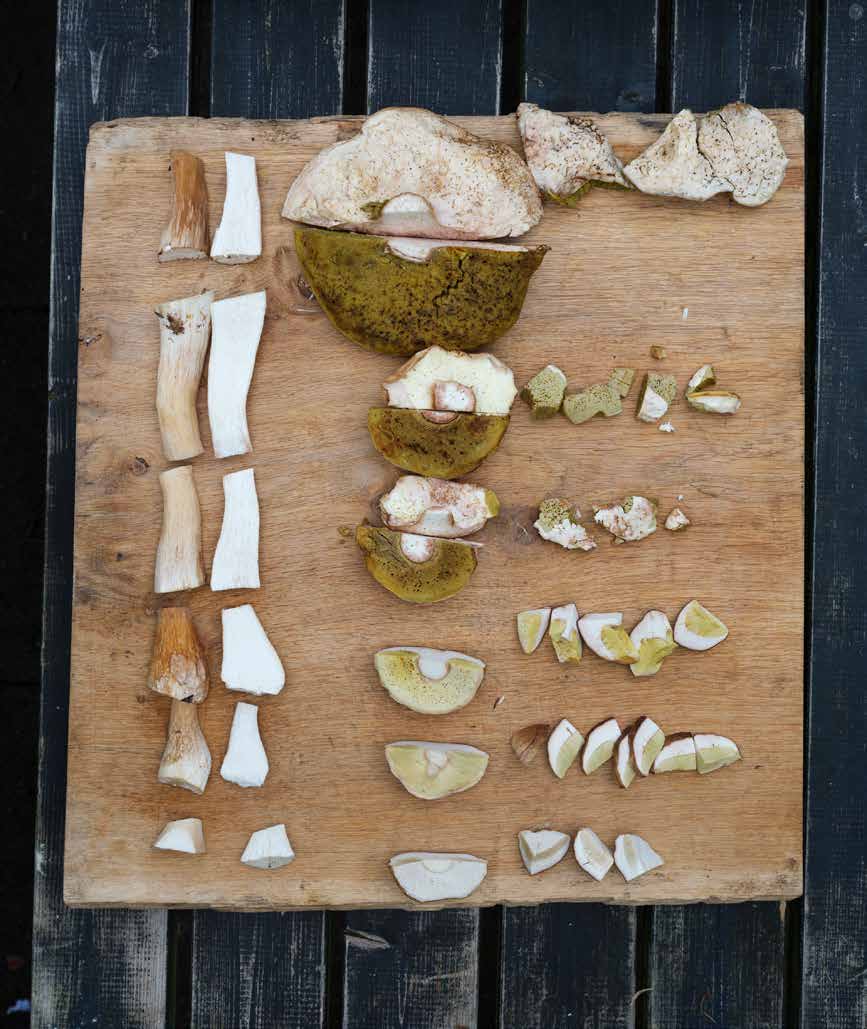
Tubes

For many years I threw away the tubes from large porcini. But one day I wondered whether they might be used for something else. The flavour of porcini is stronger in the mature tubes than in the stem and cap. Fine, small pieces of broken porcini tubes can be excellent for snacks, and they have a wonderfully crunchy bite.

The yield from porcini becomes much greater when the tubes from the large mushrooms also come home with you.

Mushrooms Are the Future

Mushrooms Are the Future

This is a mushroom book -- and a mushroom cookbook. It is a book that gathers my many years of experience with using mushrooms.

I have always been driven by gastronomy, so for me it is all about the edible mushrooms. When I started foraging for mushrooms, I first spent a lot of time learning to identify all species, but as time went on I became more and more focused on the edible ones. I simply realised that only the edible mushrooms held my interest. I am a full-blown culinary mushroom forager.

Tradition and Innovation

Originally, the mushroom tradition in Denmark was more focused on academic mycology than in many other parts of the world. But much has changed in recent years. Today the culinary mushroom foragers are the majority, and from a gastronomic perspective there has been nothing short of a revolution in the way mushrooms are used across Danish restaurants.

Despite this, there is still a great fear among Danes when it comes to eating mushrooms. It is almost as though the fear is rooted in the witchcraft and superstition of times past.

Gastronomy and Food

For many years I have been fortunate enough to work with some of the best restaurants in Denmark, and I have sat "at the big table" with the most skilled chefs in the world. I have brought them mushrooms and new ideas, but I have also taken ideas and inspiration back with me.

Today mushrooms are more popular than ever, because many people are moving away from eating meat, and mushrooms are by far the best alternative to animal protein. Mushrooms have, as the saying goes, become the vegetarian's meat.

My hope is that this book will inspire you -- not only to forage for mushrooms, but also to use them in new ways in the kitchen.

My Food Philosophy

My Food Philosophy

There is a growing tendency for us as consumers to be reduced to just that -- consumers. An entire industry has sprung up, targeting the busy family as its primary audience. No one escapes the industry's marketing, and we hear good, green stories about products everywhere.

On the other side stands the dream of being self-sufficient and of growing, foraging, and hunting your own food together with children and nothing but happy people. Both are certainly possible and come with their own joys and drawbacks, but it is far from me to subscribe to just one particular way of living.

Hedonism and the Wild

I do many things myself, but I do not forage all my food, nor do I grow it all myself. Food means a great deal to me, and the vast majority of my food choices are conscious ones. I am a hedonist and value good flavours and experiences on my palate.

The wild features in most of my meals, but I rarely eat 100% wild. That has never been my ambition. The wild has so much to offer, but not on its own. The green shoots are there when the spring craving for greens sets in, and when late summer arrives with apples and mushrooms, the appetite is for exactly that. The wild seasons are the true seasons, without greenhouses and artificial irrigation.

All in all, there is a great deal of pleasure connected with gathering food in nature. The road to the meal may be long, but the joy is greater and simply cannot be compared to having something delivered to your door.

Mushroom Fever

Mushroom Fever

If you are new to the world of mushrooms, well, there is still time to stop. If you have not yet felt your heart pounding over mushrooms, you can still turn back. But the day you stand in a forest gazing at a small cluster of porcini that you yourself have found -- they are yours, and you stand there all alone with the mushrooms -- then there is no turning back. You have caught mushroom fever!

If, like me, you have been gathering mushrooms intensively for 30 years, you naturally reach a certain point of saturation. But every winter and every spring a new hunger arises, and in July, August, and September an impatience for rain. There is an eternal hope of new adventures ahead.

There is something primal and inexplicable about mushroom hunting. Once the fever strikes, it takes hold and must be indulged. I feel joy every time I have helped ignite new mushroom hunters, and I love following their development.

In our modern lives, it is rare that we come decisively close to life and death. The struggle for food and survival is seldom present, and we obtain our sustenance by going to the supermarket. Heading into the forest, on the other hand -- without knowing what you will bring home; that gives you butterflies and a sense of excitement. It yields a very special kind of joy, and I believe many hunters and fishermen experience something similar.